
Challenge Recap
Gnocchi in Brown Butter and Sage Recap
Aug 7, 2026 · 2 min read
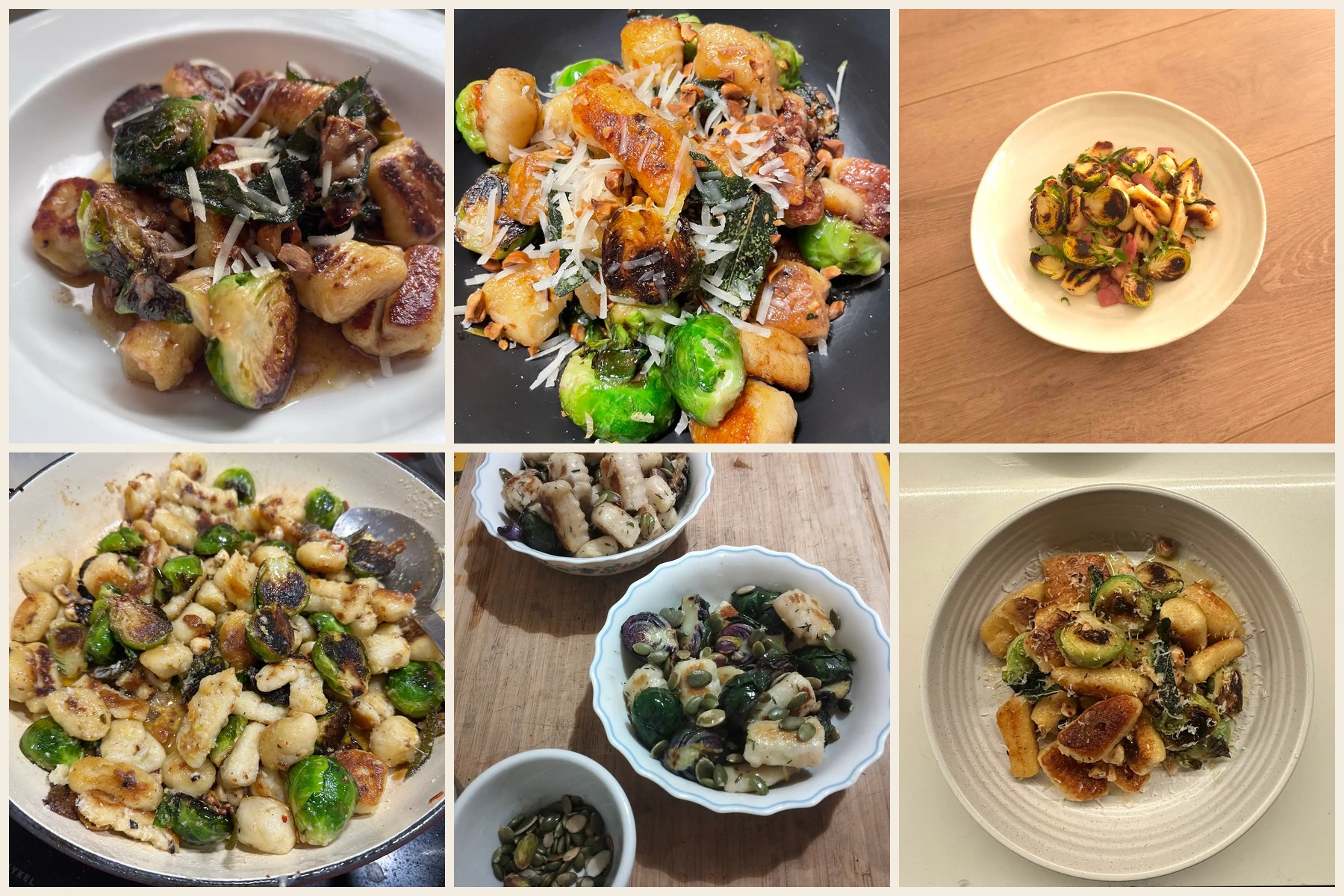
Six plates of homemade gnocchi came back. Here is what the week looked like from the fork.
Week 8 was gnocchi from scratch: baked potato, a bit of flour, roll and cut, then crisp them in brown butter with sage. Six plates came back, including a first submission and a couple of cooks on their second week running.
Where the trouble was
Not the dough. It was the shaping that slowed people down. Rolling them off a fork sounds simple and mostly is not: one cook got half a tray ridged and gave up on the rest, another cut them unevenly and ended up with some overboiled and some under, and a third only got it after finding a video, then wondered what the fuss was.
“I have attempted gnocchi a handful of times and each attempt has been pretty disastrous, so hearing that this week’s dish was gnocchi did not fill me with joy.”
What actually made the dish
Two things came up again and again. The fry, first: a couple of cooks were unconvinced by the gnocchi straight out of the water and came around completely once they were crisped in the pan. And the lemon. Three of the six named it the best thing in the bowl, cutting through all that butter and cheese. The sage, the ingredient we named the dish after, barely got a mention. Two cooks could not even find any and went with thyme or bacon and garlic oil instead, and both said the plate was still great.
What we would fix in the recipe
- Name a sage substitute up front. Thyme worked, rosemary would too.
- Give a cutting size in centimetres, so the pieces boil evenly.
- Call it an afternoon project. It is 110 minutes end to end, and people should know before they start.
Worth stealing
Bacon if you want protein in the bowl, it came up twice. Broccolini if sprouts are not your thing, though one cook ate their first ever sprout this week and liked it. And make the full batch even for two people. The uncooked ones freeze well, so the effort buys you a second dinner.
average rating from 3 cooks
What you keep
Brown butter, mostly. It takes three minutes, it works on pasta, fish, vegetables and most baking, and you now know the smell that means it is done. The other keeper is quieter. Gnocchi used to be a thing you bought, and now you know it is just potato, flour and an egg, and you have rolled and cut it at your own bench. Plenty of us will still grab the packet on a weeknight, but it is a choice now, not a mystery, and you can make the real thing whenever an afternoon opens up.
The recipe
Gnocchi in Brown Butter, Sage and Crispy Sprouts
60/110 min active/total · Serves 4 · 8 steps
Ingredients
Method
- 01
Bake the potatoes
Bake, do not boil: dry potato flesh is the secret to light gnocchi.
Heat your oven to 200°C / 180°C fan. Prick 800 g of floury potatoes all over with a fork and sit them straight on the oven rack, or on a sheet pan.
Bake for about 1 hour, until a skewer slides through with no resistance. Baking keeps the flesh dry, and dry flesh means you need less flour later, which is the whole secret to light gnocchi. Boiled potatoes drink up water and force you to add more flour.
While they bake, get everything else ready so the finish is fast: toast and chop the hazelnuts, halve the sprouts, zest the lemon and grate the parmesan.
- 02
Rice the potato and make the dough
Work the warm potato with egg and just enough flour, then stop.
Halve the hot potatoes and scoop the flesh out. Push it through a potato ricer, or grate it on the coarse side of a box grater, while it is still warm, straight onto a large chopping board. You will make the dough right on the board, so give yourself space. Spread the potato out and let it cool and steam off for a couple of minutes.
Scatter over 180 g of plain flour, 1 tsp salt and a grating of nutmeg. Make a well, add 1 lightly beaten egg, and bring it together with a bench scraper, cutting the flour in rather than kneading. No bench scraper? Cut the egg through with a fork, then switch to your hands: fold the mixture over itself, press down with the heel of your hand, turn, and repeat.
It will look like dry, shaggy crumbs for the first minute or two. That is normal. Keep folding and pressing and it will bind. Do not add water or extra flour yet. If it still will not hold together after a couple of minutes, work in a teaspoon of beaten egg.
Once it is a shaggy dough, knead gently for just 30 to 45 seconds, until it holds in a soft ball that is barely tacky. Add a little more flour only if it is genuinely sticky. The less flour and the less you work it, the lighter the gnocchi. Overwork it now and they turn chewy.
- 03
Roll, cut and ridge
Ropes, pillows, ridges: the grooves catch the butter and keep them light.
Cut the dough into four. On a lightly floured bench, roll each piece into a long rope about 2 cm thick. Try not to work in much more flour.
Cut each rope into pieces about 2 cm long. To ridge them, press each pillow against the tines of a floured fork, or a gnocchi board, and let it roll off with a gentle flick so one side takes the grooves and the other keeps a little hollow. The ridges hold the brown butter and the hollow keeps them light.
Scatter the shaped gnocchi on a floured sheet pan in a single layer so they do not stick. Do not pile them up.
Not cooking straight away? Within an hour or two, dust with a little more flour, cover the tray loosely and keep it in the fridge. Any longer, either freeze them hard on the tray then bag (cook straight from frozen, no thawing, an extra 30 to 60 seconds), or par-boil now: boil until they float, cool in cold water, drain, toss with a little olive oil and fridge. Then at dinner skip the boil and go straight to the frying pan.
- 04
Boil the gnocchi
A quick swim until they float, then drain them really well.
Bring a large pot of well-salted water to a gentle boil, not a violent rolling one, which can knock the gnocchi apart. Drop them in in batches, giving them room.
They are done about 30 seconds after they float to the surface, roughly 1 to 2 minutes in all. Before you lift the first batch out, taste one: it should be light and pillowy through the middle with no raw-flour taste. Doughy? Give them another 30 to 60 seconds and taste again, then give every batch after the same time. Lift them out with a slotted spoon and drain very well on a tray, then toss with a drop of oil so they do not stick together.
Let them steam-dry for a minute. A dry surface is exactly what lets them crisp rather than steam in the pan. Using the shop-bought shortcut? Start right here, or go straight to the pan.
- 05
Crisp the Brussels sprouts
Brown them hard in the same pan you will crisp the gnocchi in.
Heat a large cast iron or heavy frying pan over medium-high with 2 tbsp of the olive oil. Add 250 g of halved Brussels sprouts cut-side down, in a single layer, with a pinch of salt.
Leave them undisturbed for 3 to 5 minutes, until deeply browned underneath, then toss and cook another 2 to 3 minutes until crisp-tender. Add ½ tsp chilli flakes for the last 30 seconds.
- 06
Crisp the gnocchi
Single layer, leave them alone, and let a golden crust form.
Add a splash more oil to the pan over medium-high heat. Add the drained gnocchi in a single layer, working in two batches so the pan is never crowded. Crowd it and you trap steam, and steamed gnocchi never crisp.
Leave them completely undisturbed for 2 to 3 minutes, until the underside is deep golden and crisp, then toss and cook a couple of minutes more to catch the other sides, about 4 to 6 minutes in all. They should look lacquered and sound crisp as they move in the pan.
- 07
Brown the butter with sage and garlic
Cook the butter to nutty gold, crisping the sage and garlic in it.
While the gnocchi finish crisping, set a small saucepan over medium heat, light-coloured inside if you have one, so you can see the butter change. Add 115 g of butter. It will melt, then foam.
Drop in 12 sage leaves and 2 thinly sliced garlic cloves. Keep swirling. After the foam settles, the milk solids on the base turn golden brown and the butter smells distinctly nutty, like toasted hazelnuts, about 3 to 4 minutes. Stir in 1 tsp honey now if using; it balances the sprouts and helps the colour.
Pull the saucepan off the heat the instant it smells toasty. Brown butter goes from nutty to acrid in seconds, and it keeps cooking on residual heat.
- 08
Bring it together and finish
Toss everything through the butter, then brighten it off the heat.
Tip the sprouts back in with the gnocchi in the big pan, then pour over the brown butter with its sage and garlic. Toss so every piece is coated.
Off the heat, add half the lemon’s zest and a good squeeze of its juice, 40 g of toasted chopped hazelnuts and half the parmesan. Add the lemon off the heat so it stays bright instead of dulling in the hot pan.
Pile into warm bowls and finish with the rest of the parmesan, the crispest of the sage leaves and the rest of the lemon zest. Serve straight away, while the edges are still crisp.