
Challenge Recap
Cinnamon Scroll Workshop Recap: Rise, Don't Rush
Jul 24, 2026 · 3 min read
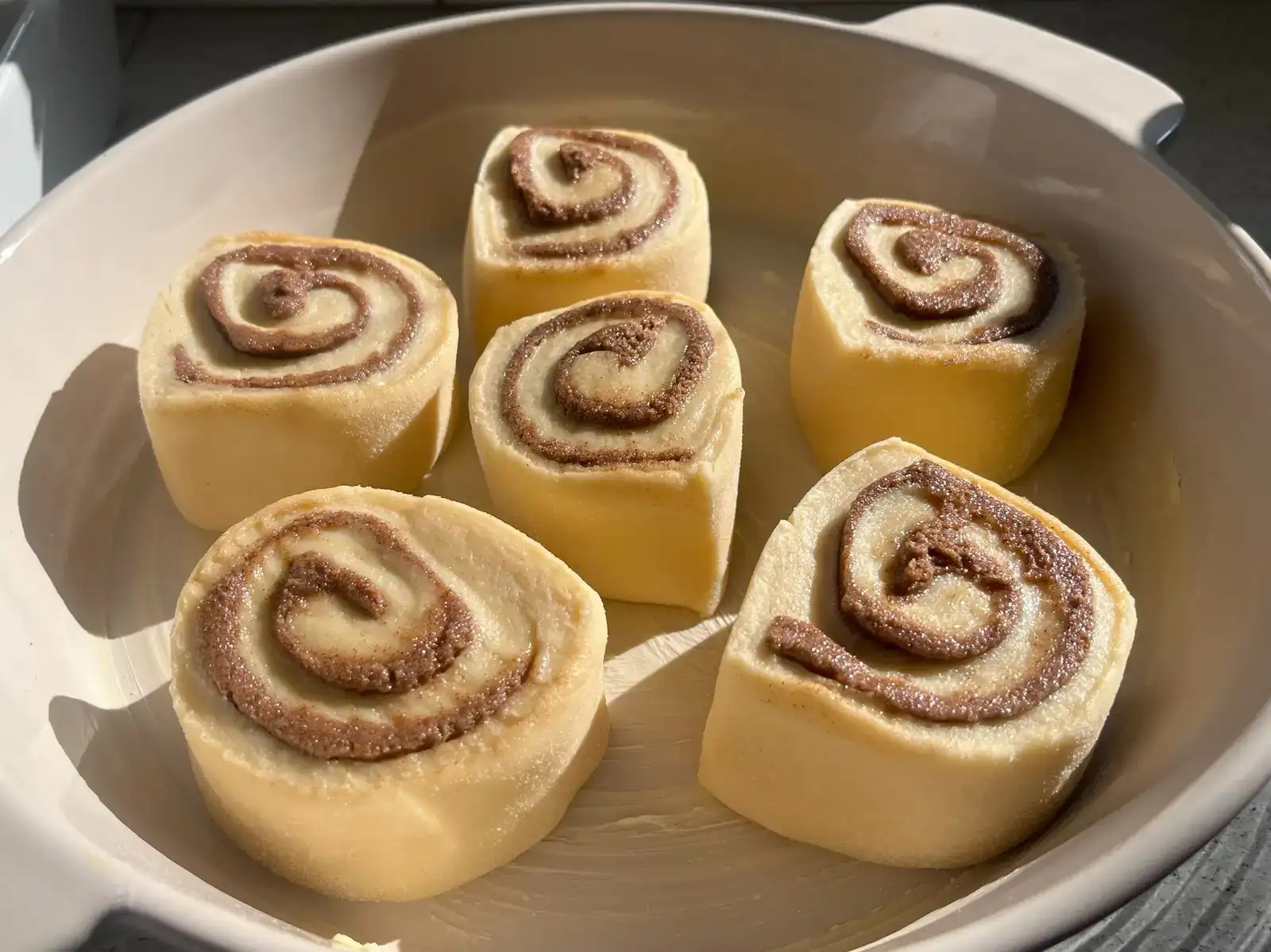
We asked everyone to make enriched dough from scratch and roll it into cinnamon scrolls. They came out soft and glossy, and the part that took real judgement was not the dough. It was proving it in a cold winter kitchen.
Cinnamon scrolls are one of those bakes people mean to make and never quite get to. Enriched dough from scratch, two proves, rolling and cutting the spiral. This challenge was the push to do it. The scrolls came out soft and nobody reported a dense batch.
average rating from 4 cooks
The technique was the easy part
The dough sounds like the bit that goes wrong. Not this time. One cook let a stand mixer do the kneading and had a smooth dough with no fuss, and nobody reported a fight with it either way. The part that actually took some judgement was the proving.
Proving is the winter test
Winter is the hard season for a rise. Yeast slows right down in the cold, and a dough that would double in an hour on a warm day can sit and sulk in July. Give it a warm spot to prove: near a heater, or in the oven with just the light on, somewhere around 24 to 26 degrees. This matters more than most recipes let on, because an Australian winter is not one thing. A Melbourne or Hobart kitchen can sit under 15 degrees while Brisbane barely feels the season, so one set of proving times will be well off depending on where you are. One cook found it hard to tell when the dough was ready after a cold proof and went by the poke test instead. That is the right call, and the recipe should really say so: go by feel, and expect a cold room to stretch the timing. A poke that springs back slowly means ready. One that springs straight back needs longer. Trust the dough, not the timer.
The only real note
The one thing that came up more than once was sweetness. A few cooks found them a touch sweet and said they would ease off the sugar next time, which is easy enough and down to taste. Nobody was put off.
“Super sweet but I could not stop eating them.”
What you keep
This was really a lesson in enriched dough, and that travels a long way. The same soft, buttery dough is the base for brioche, hot cross buns, and half the sweet buns in any bakery. Once you can read a prove by feel and roll a tight spiral, you can point it at something else. One cook already did, adding cardamom to the dough and filling for a Swedish twist worth stealing. And a practical keeper: these reheat as well as anything, so ten seconds in the microwave brings a day-old scroll back to day one. The scrolls were one Saturday. The dough is yours now.
The recipe
Cinnamon Scrolls with Cream Cheese Glaze
45/180 min active/total · Serves 12 · 10 steps
Ingredients
Method
- 01
Wake up the yeast
Bloom the yeast in warm milk so you know it is alive before you commit.
Warm the 300 ml milk until it is just lukewarm, about 40°C. The test: it should feel like a comfortable bath on a clean finger, never hot. Anything above roughly 50°C starts killing the yeast, and that is the number one reason scrolls come out dense.
Stir the 9 g yeast and a tsp of the caster sugar into the warm milk. Leave it somewhere warm for 5 to 10 minutes until the top turns foamy and frothy. That froth is the yeast feeding, it is your proof it works.
If nothing happens after 10 minutes, the yeast is dead or the milk was too hot. Tip it out and start again, it is much cheaper than baking a dense batch. While you wait, melt the 60 g dough butter and set it aside to cool.
- 02
Mix the dough
Bring everything into a soft, shaggy dough.
In a large bowl (or the bowl of a stand mixer) whisk together the 600 g flour, the rest of the caster sugar and the 6 g salt. Whisking the salt through the flour first keeps it from landing directly on the yeast.
Make a well in the centre and pour in the foamy milk, the 2 beaten eggs and the cooled melted butter. Mix with a wooden spoon or the dough hook until it comes together into a rough, shaggy dough with no dry flour left in the bowl.
It will be soft and a little sticky. That is exactly right for an enriched dough, so resist the urge to bury it in extra flour now, or the scrolls will bake up dry.
- 03
Knead to smooth and elastic
Turn a soft dough into a strong one, and read the windowpane.
Turn the dough onto a lightly floured bench. Knead by hand for 8 to 10 minutes: push it away with the heel of your hand, fold it back, give it a quarter turn, and repeat in a steady rhythm. In a stand mixer, use the dough hook on medium for 5 to 6 minutes.
It will transform from rough and sticky into smooth, springy and only slightly tacky. Add flour a tsp at a time only if it is genuinely unworkable, a tacky dough makes soft scrolls.
Test it with the windowpane: stretch a small piece thin between your fingers. If it goes translucent without tearing straight away, the gluten is ready. If it rips, knead a couple more minutes and test again.
- 04
First prove
Let the yeast do the heavy lifting.
Shape the dough into a smooth ball and set it in a lightly oiled bowl, turning it once to coat. Cover with a damp tea towel or cling film so the surface does not dry out and crust.
Leave it somewhere warm and draught-free for 1 to 1.5 hours, until doubled in size. In a cold winter kitchen, turn the oven on for one minute then off and prove it in there with just the light on, or sit the bowl near something warm.
It is ready when a finger poked about 1 cm into the dough leaves a dent that springs back slowly and only part way. If it springs straight back it needs longer.
- 05
Make the cinnamon filling
Beat a spreadable cinnamon paste while the dough rises.
In a small bowl, beat the 90 g softened butter with the 220 g brown sugar, the 16 g of cinnamon and a pinch of salt until it comes together into a soft, spreadable paste.
Softened butter is the whole game here. Fridge-cold butter will not spread and will tear the rolled-out dough. If yours is firm, microwave it in 5 second bursts, but stop well before it melts.
Melted filling is worse than cold: it turns to liquid, pools at the base and leaks straight out of the scrolls as they bake. You want the texture of a thick frosting.
- 06
Roll out and fill
Roll a neat rectangle and spread it edge to edge.
Knock the air out of the risen dough and turn it onto a lightly floured bench. Roll it into a rectangle roughly 30 x 40 cm and about 5 mm thick, with a long edge facing you. Keep the corners square as you go for even scrolls.
Spread the cinnamon paste right to the edges, but leave a clean 1 to 2 cm strip along the far long edge. That bare strip is what seals your log shut at the end.
Press the filling in gently with the back of the spoon so it grips the dough and does not slide as you roll.
- 07
Roll the log and cut the scrolls
Tight and even is what gives clean spirals.
Starting from the long edge nearest you, roll the dough away from you into a firm, even log. Keep the tension consistent so there are no loose gaps in the spiral, but do not stretch it so hard the filling squeezes out.
Pinch the bare seam to seal, then settle the log seam-side down. Trim the scruffy ends, then cut 12 even scrolls about 3 cm wide. Marking the cuts first helps them bake evenly.
The cleanest cut is a length of unflavoured dental floss: slide it under the log, cross the ends over the top and pull. It slices through without crushing the spiral. A serrated knife with a gentle sawing motion also works.
- 08
Second prove
A short warm rest so they bake up pillowy.
Grease or line your baking dish, about 23 x 33 cm, or use a round tin. Arrange the scrolls cut-side up with a small gap between each one, they will grow together as they prove and bake.
Cover loosely and prove somewhere warm for 30 to 45 minutes, until they look puffy and are just touching. While they prove, heat the oven to 180°C / 160°C fan.
They are ready when they look visibly pillowy and a gentle press springs back slowly. Do not rush this, under-proved scrolls bake up tight and bready instead of soft and pull-apart.
Make ahead: instead of proving now, cover the dish tightly and refrigerate the scrolls overnight (8 to 16 hours). The slow cold prove deepens the flavour and gets all the fiddly work done the night before. In the morning, uncover them and let them come up to room temperature and finish rising, about 45 to 90 minutes, until puffy and springy. Do not bake them straight from the fridge or they will set on the outside before the centres cook.
- 09
Bake
Golden on top, cooked right through the middle.
Bake at 180°C / 160°C fan for 22 to 25 minutes. Rotate the dish at the 15 minute mark so they colour evenly.
They are done when the tops are deep golden and the centre scroll no longer looks doughy where the scrolls join. A skewer pushed into the middle one should come out clean, or an instant thermometer should read about 88°C in the centre.
If the tops are browning faster than the middle is cooking, tent the dish loosely with foil for the last few minutes.
- 10
Glaze and serve
Cool briefly, then glaze while still warm.
Make the glaze while the scrolls bake. Beat the 90 g softened cream cheese and 50 g softened butter until completely smooth, then beat in the 150 g icing sugar and 1 tsp vanilla. Loosen with a tbsp or two of milk until it falls in a thick, pourable ribbon.
Let the baked scrolls cool for 10 minutes, so they are warm rather than piping hot. Spread or drizzle the glaze over the top so it half-melts into the crevices and half sits proud and glossy.
Pull them apart and eat while they are still warm, that first steamy, gooey-centred scroll is the whole point.